
After Hours Painting Labor Rate: Why You Need a 1.5× Multiplier (And How to Sell It)
If your crew painted a retail store from 10pm to 6am last month, and you charged the same hourly rate as a 7am start, you lost money. Not a little — a lot. Overtime costs, fatigue-related slowdowns, and the simple fact that nobody wants to work nights for standard pay all hit your margin at once. The after-hours painting labor rate you charge needs to reflect the real cost of that work. Here's how to build it, justify it, and present it without scaring off the client.
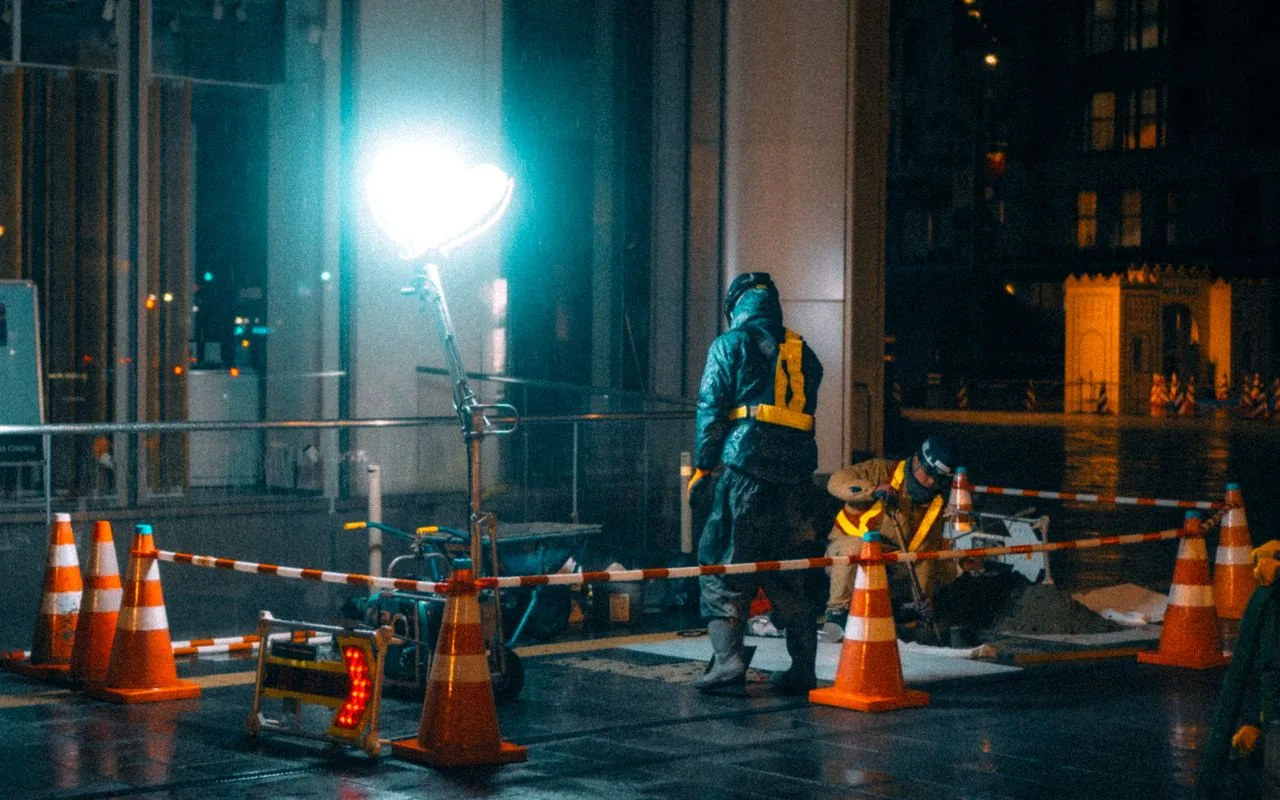
Why Night Work Costs More Than Day Work
It's not just about inconvenience. When your crew works outside standard hours, three things happen simultaneously that each erode your margin.
First, your labor cost goes up. In most markets, any hours worked outside the standard window — typically before 7am or after 6pm on weekdays, and any time on weekends — trigger overtime or penalty rate obligations. Your fully-loaded labor cost might be $35–50/hr USD (or $42–60/hr AUD, £18–30/hr GBP, $30–45/hr CAD, $32–46/hr NZD) during standard hours. After-hours work can push that 25–50% higher depending on your jurisdiction and employment agreements. If you're quoting the same rate, you're eating that difference.
Second, productivity drops. A painter working a midnight shift is not as productive as the same painter at 9am. Fatigue affects cutting-in accuracy, roller technique, and general pace. What might run at a Step 4 Steady rate of 15 m²/hr (160 ft²/hr) during the day can easily drop to a Step 3 Careful pace of 10 m²/hr (110 ft²/hr) by hour five of a night shift. That's a 33% reduction in output on the same quoted hours.
Third, safety risk increases. Fatigue is a major contributor to workplace incidents. Working on ladders, scaffolding, or boom lifts at 2am with a tired crew is a different risk profile than the same setup at 10am. More incidents mean more claims, higher insurance premiums, and real costs that don't show up until renewal time.
What the 1.5× Multiplier Actually Covers
A 1.5× after-hours labor rate multiplier isn't padding — it's cost recovery. Here's what it needs to cover:
- Overtime and penalty rates: The actual increase in what you pay your crew under your employment agreements or contractor arrangements.
- Productivity loss: If your effective output drops 20–30%, your hours blow out. The multiplier compensates for this without having to re-estimate every night job from scratch.
- Supervision premium: Night work often requires a more experienced painter to lead the crew. That person costs more and you need to account for it.
- Setup and logistics: Getting materials, equipment, and access sorted for a 10pm start takes more coordination than a standard day job. That time has a cost.
- Risk loading: You carry more liability on after-hours work. It belongs in your price.
A 1.5× multiplier on your labor component is a reasonable, defensible position. On a job where labor represents $2,000 at standard rates, that means charging $3,000 — a $1,000 difference. That's not gouging. That's accurate pricing.
When to Apply It
Not every early start warrants an after-hours rate. Be specific about your trigger points so you can communicate them clearly to clients. A common approach:
- Standard hours: 7am–5pm Monday to Friday
- Margin hours (1.25×): 5am–7am or 5pm–7pm weekdays, Saturday mornings
- After-hours (1.5×): Before 5am or after 7pm weekdays, Saturday afternoons, Sundays
- Public holidays (2×): Non-negotiable in most markets — this is often a legal minimum
Nail down your own trigger points based on your actual employment costs in your market. The rates above are a guide — your agreements and jurisdiction determine your real floor.
The important thing is that these are written down, consistent, and included in your quote template before a client asks about them. Consistency across your team matters too. If different estimators are applying different rules, you'll have wide pricing variation on after-hours work — and the low quotes will always win internally, which trains your team to undercharge.
How to Present It Without Losing the Job
This is where most contractors fumble. They either hide the after-hours rate in the total (and get challenged when the client does the math), or they apologize for it when presenting the quote. Neither works.
Here's what does work:
Line-item it clearly. Show standard labor hours, standard rate, then a separate line for after-hours loading. Something like: Labor — 40 hours @ $55/hr = $2,200. After-hours loading (1.5×) applied to 40 hours = $1,100 additional. Transparency builds trust. Clients who need the work done after hours already know it costs more. They're not shocked — they're looking for confirmation you've handled it professionally.
Frame it around their requirement, not your cost. The client chose the after-hours window. Usually it's because they can't close their store, they need to be open by Monday, or they don't want the disruption during business hours. Acknowledge that: "Because you need this completed while the building is occupied during the day, we'll be working evenings. Our after-hours rate applies to those shifts, which covers the penalty rates and the additional coordination required."
Separate it from your paint and materials cost. After-hours loading is a labor adjustment only. Don't muddle it with material costs or your base margin. Keep it clean so any client review doesn't trigger questions across your whole quote.
Put it in your quote template as a standard section. When it's a boilerplate part of every after-hours quote you send, it feels like policy — not a negotiating position. Tools like Surfacely let you build labor rate adjustments directly into your quote structure, so the multiplier applies consistently every time without manual calculation or guesswork.
The Jobs That Will Test You
Some clients will push back. A facilities manager who books painting contractors regularly will know the market rate and may try to negotiate the loading down. A few things to hold in mind:
First, clients who consistently need after-hours work and won't pay a fair rate are not good clients. They're transferring their operational constraints onto your margin. That's not a partnership — it's a subsidy.
Second, if a competitor is doing after-hours work at standard rates, they're either losing money or cutting something else (prep quality, crew experience, supervision). That's not a price you need to match.
Third, you can offer a genuine alternative: if they can give you daytime access, you can bring the price down. Put it back in their hands. Some clients will find a way. Others will confirm they need the after-hours window and accept the rate.
One Number to Remember
On a typical commercial repaint running $8,000 in labor, the difference between charging standard rates and charging a 1.5× after-hours rate is $4,000. If you did four jobs like that this year at standard rates, you left $16,000 on the table — before you even account for the productivity loss and penalty rate costs you absorbed. That's not a rounding error. That's a van repayment.
Set the rate. Put it in writing. Present it without apology. The clients who are worth working with will respect it.