
How to Quote Painting a Unit Complex (And Actually Protect Your Margin)
A 24-unit complex looks like one job. It isn't. It's 24 separate decisions about condition, prep level, access, and risk — and when you price it as a single lump sum, you're averaging your way into a loss. The buildings on the south side are always worse than the ones facing north. The end units have more exposure. Three of them haven't been touched in 15 years while the rest got a coat four years ago. Put one number on the whole site and you've guaranteed that the bad ones eat the margin you thought you made on the good ones.
Measure Each Building as Its Own Job
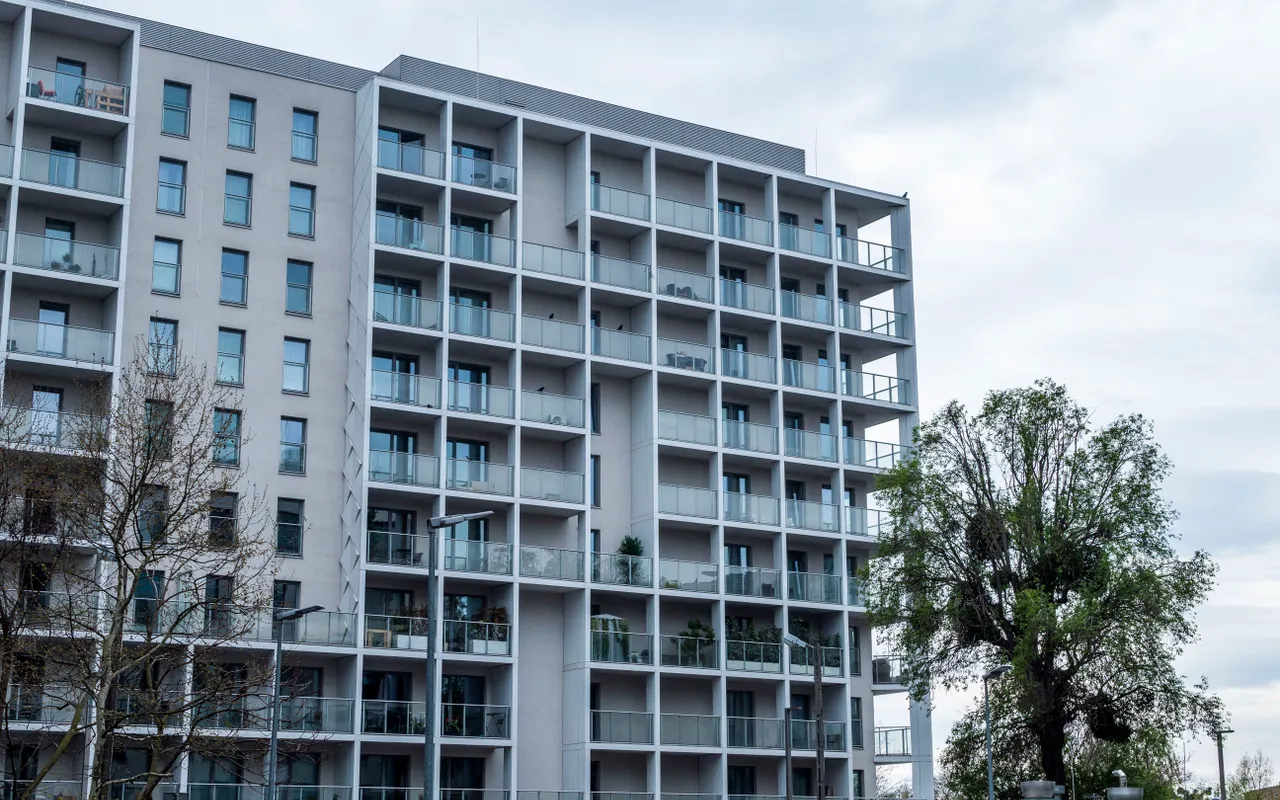
The first discipline with a unit complex, townhouse development, or apartment block is simple: treat every building as a separate scope. Walk each one. Measure each elevation separately — north, south, east, west. Note the eaves depth and condition. Measure the fascia and gutter runs. Count the doors and note whether they're flush or paneled. Count the balustrades and estimate their lineal length. Don't round up one building to match another because they look similar from the street.
This matters because surface area drives material cost and production hours, and two buildings with the same footprint can have very different surface areas once you account for balconies, second-story eaves, and whether the ground-floor windows have sill boards. Measure them separately. Price them separately.
On the access side, note which buildings need scaffolding or a boom lift to reach the eaves and fascia. That cost doesn't average out — it belongs to the specific building that needs it, and burying it in a site-wide rate is how access costs silently kill margin.
Price Prep Based on Condition, Not on Assumption
Prep is where unit complex quotes go wrong more than anywhere else. Painters walk a site, eyeball 24 buildings, decide they all look "about the same," and apply a single prep rate. Then they start work and find that buildings 7, 12, and 19 are peeling on the west elevation, the timber fascia on three end units is soft, and two buildings haven't been washed in a decade.
Prep level is determined by condition only — and condition varies building by building, sometimes elevation by elevation. A surface in good shape with sound paint and no peeling sits at Standard prep (270 ft²/hr / 25 m²/hr): wash, sand, fill, spot prime. That's your baseline for a well-maintained repaint. A weathered or peeling surface needs Heavy prep (115 ft²/hr / 10.5 m²/hr) — widespread scraping, filling, and primer spots. That's more than twice the prep hours for the same surface area. If you quote Standard and find Heavy on site, you've already lost the margin on that building before the first coat goes on.
Where a building has genuinely neglected areas — flaking throughout, failed paint, substrate visible — you're looking at Very Heavy prep (70 ft²/hr / 6.5 m²/hr): scrape back, fill, full prime. On a large exterior wall, the difference between Standard and Very Heavy prep is significant hours. Get it wrong on three buildings and the whole job is underwater.
Assign a prep level to each elevation of each building. Record it. That record is your defence if the committee later questions why two buildings cost more than the others.
Build the Quote So Each Building Has Its Own Price
Once you've measured and prepped each building separately, the total price is just the sum of the parts — but how you present it matters enormously.
A strata committee, body corporate, or condo board doesn't think in total site costs. They think in budgets, levies, and votes. When you hand them a single number, they'll either approve it or reject it. You want them to approve part of it, ask questions, and come back for the rest. That only happens when each building has a line item.
Present the quote as a building-by-building breakdown: building number or address, surface area, condition rating, prep level, paint system, and price. Subtotal each building. Then total the site. This format does three things. First, the committee can see exactly what they're getting for each dollar. Second, if they want to defer two buildings because of budget, you can tell them the price of those two instantly — nothing needs to be re-quoted because the per-building price is already locked. Third, when the client later claims one building "wasn't as bad as you quoted," you have a documented condition assessment per building to stand behind.
Per-building pricing is also how you protect yourself from scope reduction. On a lump-sum quote, dropping two buildings from a 24-building site might seem like it should reduce the price by 8%. But if those two buildings had the lightest prep and the easiest access, dropping them could represent only 5% of the cost. With per-building pricing, the client sees the exact price of each building and the reduction is unambiguous. No renegotiation. No awkward conversation.
When the Budget Won't Stretch to the Whole Site
Strata committees run on annual budgets. A site-wide repaint is often the biggest spend they'll approve in a given year, and plenty of committees simply can't fund all 24 buildings at once. When that happens, most painters lose the job to a competitor who'll quote the ten worst buildings cheaply and walk away from the rest.
A better answer is to offer the whole site as a multi-year program. You've already measured every building separately. You've already priced each one on its own condition. All that's left is to sequence them — worst condition first — and spread the work over two, three, or four years based on what the committee can fund annually.
The price of each building stays fixed to the measurement. Each year is its own phase with its own deposit at the start of that year. Work is invoiced as it's completed. Buildings already painted in year one get a touch-up allowance in subsequent years — a set number of crew days, priced in, to catch any early failures before they spread. The annual price adjustment — CPI, a construction index, or an agreed fixed percentage — is named upfront. No surprises, no re-quoting.
For the committee, this is an easy vote. They get a plan, a known annual cost, and a professional who's already done the hard work of sequencing by condition. For you, it's a multi-year agreement on a site you've already measured — with no competitor able to re-quote individual buildings without doing the full site assessment you've already done.
Surfacely measures and prices each building separately inside one job, and any job with two or more measured buildings can be structured as a multi-year program directly from the estimate — sequenced by year, with touch-up days calculated per phase and price adjustment terms set upfront. The committee gets a clean, phased proposal; you get a site you own for years.
The Takeaway
Quoting a unit complex as a single number is the fastest way to work hard and break even. Measure every building separately. Price prep by actual condition — not by what the site looks like from the driveway. Present a building-by-building breakdown so the committee can make decisions and so you're protected when they try to make changes. And when the budget isn't there for the whole site, offer a multi-year program instead of a discount.
The painters who win and hold strata work aren't the cheapest. They're the ones the committee trusts to know what each building costs and why. That trust starts with the quote.
Want to see how this works in practice? Try Surfacely free and build your first multi-building quote — each building measured and priced separately, ready to present as a one-year scope or a multi-year program.