
Why Painting Estimating Is Best Broken Down by Surface (And How It Fixes Your Margin Problem)
A 20-room commercial repaint shouldn't be one number on a page. Neither should a two-storey exterior with weatherboards, fascia, gutters, and a set of balustrades. When painters price a complex job as one lump sum, they're not estimating — they're guessing. And on a $40,000 job, a bad guess doesn't just cost you a few hundred dollars. It can wipe out every dollar of profit you thought you had.
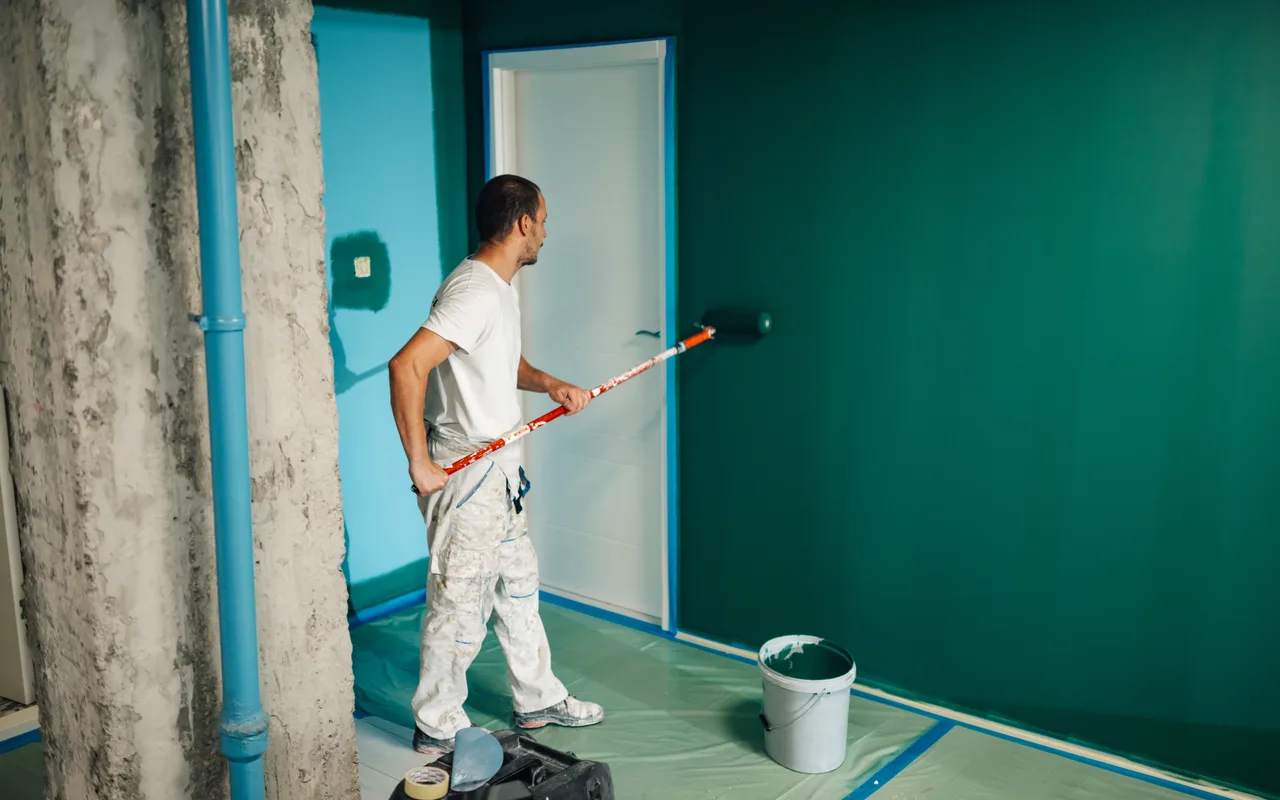
The Complexity Problem Is Really a Breakdown Problem
Most painters who avoid quoting complex jobs aren't afraid of the work — they're afraid of getting the price wrong. And that fear is justified when your quoting method is "look at it, think about it, pick a number." The job feels overwhelming because you're trying to hold the whole thing in your head at once.
The fix isn't a better gut feeling. It's a smaller unit of measurement.
Think about it this way: you wouldn't walk onto a site and say "I'll paint everything in about three days." You'd paint the walls, then the ceiling, then the doors, then the trims. You work surface by surface. Your estimate should work exactly the same way.
When painting estimating is best broken down by surface, every individual component becomes manageable. A wall is just a wall. A ceiling is just a ceiling. A set of heritage skirting boards is its own line item with its own complexity rating — not a vague "add a bit more" mental note that disappears by the time you write the final number.
Every Surface Has Its Own Speed — And Ignoring That Costs You
Not all surfaces eat time at the same rate. A wide-open exterior wall and a set of multi-panel heritage doors are not the same job, even if they have the same square footage. Treating them the same way is where margin quietly bleeds out.
Production rates vary dramatically by surface type and complexity. At a standard repaint pace, walls run at around 15 m²/hr (160 ft²/hr). Ceilings slow to 10 m²/hr (110 ft²/hr) because of the body position and cut-in demand. Doors drop further — around 6.5 m²/hr (70 ft²/hr) — because of the panels, edges, and rebates. If a job has 24 doors and you've priced them at wall speed, you've already lost the job before you start.
This is why surface-by-surface estimating matters so much. When you assign the right production rate to each surface, the hours stack up honestly. You're not averaging out the complexity across the whole job and hoping it balances. You're capturing it precisely, surface by surface, area by area.
A purpose-built tool like Surfacely applies these exact production rates automatically, by surface type, so you're never using a wall rate where a door rate belongs.
Prep Is Where Most Estimates Fall Apart
If production rates are where painters lose hours, prep levels are where they lose the most money without realising it.
There are nine prep levels, and picking between them is the single highest-leverage decision in the quote:
- None (no prep) — new or pre-prepped surface
- Minimal (75 m²/hr) — scuff and dust, near paint-ready
- Light (37.5 m²/hr) — light sand, very good condition, minimal filling
- Standard (25 m²/hr) — wash, sand, spot-fill: the sound-repaint baseline
- Moderate (15 m²/hr) — older surface, more filler, minor repairs and scraping
- Heavy (9.25 m²/hr) — neglected or peeling: spot strip, extensive filling, primer spots
- Very Heavy (6 m²/hr) — weathered exterior, full strip, major substrate repair
- Extensive (5 m²/hr) — heavy strip plus full prime, significant substrate damage
- Restoration (2.25 m²/hr) — heritage detail and substrate rebuild; prep dominates the job
The most common mistake in contractor quoting is applying Standard (25 m²/hr) to a surface that clearly needs Heavy (9.25 m²/hr) or Very Heavy (6 m²/hr) prep. That gap — 30% versus 80% — on 400 m² (4,300 ft²) of exterior weatherboards is not a rounding error: at Step 4 with two coats that's 53 paint hours, so prep alone swings from 16 hours to 43. Twenty-seven hours you're doing for free.
When you estimate by surface, you're forced to make a deliberate call on each one. The rotting fascia gets Heavy. The freshly rendered wall gets Light. The peeling window frames get Very Heavy. You stop averaging the prep across the whole job and start pricing it where it actually lands.
A Repeatable System Means Every Painter on Your Team Quotes the Same Way
Here's a problem that hits once you've got more than two or three painters: inconsistency. One estimator prices windows at wall speed. Another forgets to add downtime. Someone leaves scaffolding out of the quote entirely — which is one of the most common and most expensive mistakes in exterior work.
A surface-by-surface system removes the variability. When every quote follows the same structure — surface type, area, production rate, prep level, coat count, access requirements — you get predictable results. You know what a job should cost before it starts, and you can check the actual hours against the estimate when it finishes.
That feedback loop is how you refine your numbers over time. Did the balustrades take longer than the 6.5 m²/hr (70 ft²/hr) rate suggested? Update your default for that surface type. Did the spray coat on the new-build ceilings run faster than expected? That 35 m²/hr (375 ft²/hr) production rate held up. You're building a business system, not just writing quotes.
Surfacely is built around exactly this logic — a structured, surface-level quoting framework that applies consistent production rates, prep levels, and access costs across every job, so every estimate your business produces is built the same way.
Start Small, Price Everything, Stop Leaving Money on the Table
The painters who consistently hit real margin — not the 30–50% markup they quoted, but the 12–18% net margin they actually keep — are the ones who've stopped pricing jobs as single numbers and started building estimates from the ground up, one surface at a time.
Complex jobs stop being scary when they're broken into pieces you actually know how to price. A 40-square exterior repaint with scaffolding, heritage trims, and weathered fascia isn't one job. It's walls, fascia, gutters, windows, and soffits — each with their own rate, their own prep level, and their own access cost.
When painting estimating is best broken down by surface, the quote becomes a document you can defend, a benchmark you can measure against, and a system any member of your team can follow.
That's not just better quoting. That's how you build a business that stays profitable at scale.
If you want to see what surface-by-surface estimating looks like in practice, take a look at how Surfacely structures a quote from the first surface to the final number.