
Rain Delay Exterior Painting: How to Schedule for Weather Without Bleeding Margin
You're three days into a 10-day exterior repaint. The weather turns, dew point spikes, and you can't touch the surface until conditions recover — but the client is calling, the crew is idle, and your schedule is already two days behind. Nobody's happy, and the quote you sent didn't account for any of it. That's not bad luck. That's a planning gap.
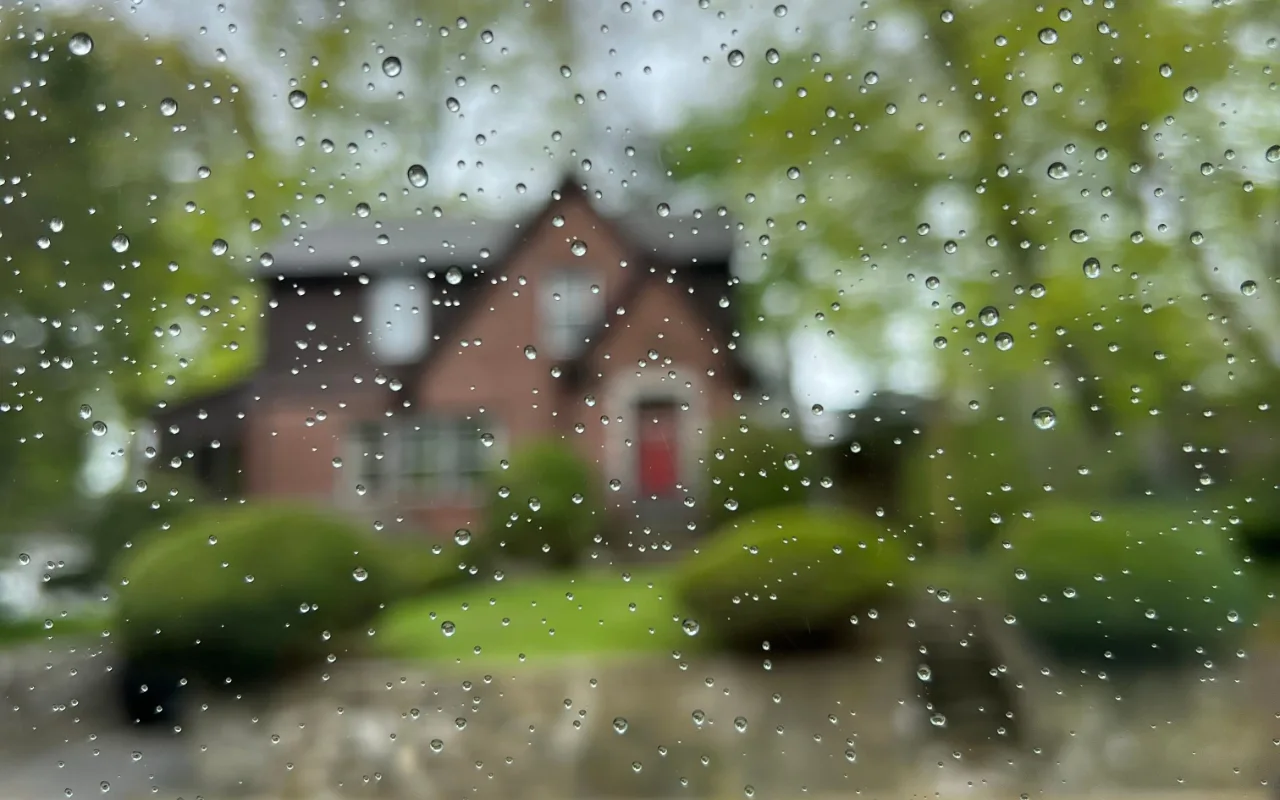
Weather Isn't the Problem — Ignoring It in Your Schedule Is
Most exterior quotes are written as if painting happens in a climate-controlled vacuum. A 10-day job gets a 10-day schedule. The problem is that exterior painting has hard environmental limits, and those limits aren't just about rain falling from the sky right now.
The real killers are dew point and surface temperature. Paint applied when the surface is within 5°F (3°C) of the dew point will fail — blistering, poor adhesion, sheen problems that don't show up until weeks later. Direct sun on a dark substrate can push surface temperature 20–30°F (11–17°C) above air temperature, making afternoon painting on a hot day just as risky as painting in the cold. Neither of those shows up on a weather app.
Then there's the recoat window. A standard acrylic exterior topcoat might need 4 hours between coats in ideal conditions. Bump humidity above 85% and that window stretches to 8 hours — sometimes the full next day. You planned two coats in a day. You get one. The schedule slips, and that slip costs you real money in crew time, equipment rental, and site revisits.
The solution isn't to pad the price with phantom hours. It's to build a schedule that accounts for weather honestly — and to have the conversation with the client before the first brush hits the wall.
The Mechanics of a Rain Delay (It's Not Just the Wet Day)
A single rain event on an exterior job doesn't cost you one day. It costs you more, and here's exactly why.
Say you had a washdown day scheduled — pressure washing weatherboards before the first coat goes on. That's now gone. The surface needs to dry thoroughly before you can prep or paint, which on a shaded elevation can take 24–48 hours after heavy rain, not the hour or two people assume. If you've already applied one coat and rain hits before the recoat window closes, you may be looking at a full sand-back and recoat, not just a delay.
A single two-day rain event mid-job can realistically blow out a 10-day schedule by 4–5 days when you account for dry time, rescheduling crew, and the surface getting dirty again between coats. On a fixed-price contract, that's your margin — not the client's problem.
This is why weather contingency has to be built into the schedule structure, not the price.
Schedule Float: The Right Way to Build in Contingency
The practical rule: for an exterior program running 5 days or more, build in one float day for every four working days scheduled. On a 12-day exterior job, that's 3 float days — call it a 15-day program. You're not charging for those 3 days. They're buffer. If the weather holds, the job finishes early and the client is delighted. If it doesn't, you finish on the date you promised.
Float days aren't padded hours. They don't inflate your labour cost or your sell price. They're schedule positions that exist to absorb the uncontrolled variable — weather — that every exterior job carries. The difference between a contractor who looks professional and one who looks disorganized is often just whether they planned for this before it happened.
When weather does eat a day, document it the same day. A quick note to the client — surface temperature, dew point, conditions — logged against the date, is the difference between a weather delay and a dispute. Without that, the client reads slippage as your crew being slow.
What to Put in Writing Before the Job Starts

Your quote or proposal needs a weather clause. Not buried in fine print — a short, plain paragraph that the client reads and acknowledges before the job starts. It covers three things:
- Environmental conditions required to paint: surface temperature above 50°F (10°C), below 95°F (35°C), no rain forecast within 4 hours of application, humidity below 85%, surface temperature at least 5°F (3°C) above dew point.
- What happens when conditions aren't met: work pauses, the schedule shifts by the number of days affected, the finish date moves accordingly.
- How the client is notified: same-day communication if a weather delay occurs, updated finish date provided within 24 hours.
That's it. Three points, one paragraph. Clients respect it because it shows you understand the work, and it protects you when a wet week turns a two-week job into three.
If you're using a scheduling tool or sending the client a job timeline, make sure both you and the crew are looking at the same dates. Crew rolling up to a site on a hold day because they're working off an old schedule costs you hours and trust — and it's entirely avoidable if the rescheduled dates are communicated in writing, in one place, the moment conditions change.
Keeping the Client Informed Without Turning It Into a Drama
The worst outcome on a weather delay isn't the lost day — it's the client who doesn't know what's happening and starts calling around to find out if you're coming. That's the moment trust erodes.
A simple message on the delay day — "Surface conditions this morning don't meet spec for application. Dew point is sitting too close to surface temperature. We'll reassess tomorrow morning and confirm the updated schedule by midday" — takes 30 seconds to send and eliminates 90% of client anxiety. It signals that you're monitoring the job, that the delay is a professional call, and that you're already managing the recovery.
Then follow up as promised. If the schedule moves by two days, send the revised dates the same day you assess conditions. Don't wait until Friday to explain what happened on Tuesday.
Surfacely's scheduling tools let you log notes and push revised dates to the client and crew in the same move — so when a weather delay hits, the update goes to everyone who needs it, not just whoever you remembered to call. A small thing, but on a job already under weather pressure, it removes one more thing that can go wrong.
The Takeaway
Weather delays on exterior jobs are a certainty, not a risk. The painters who manage them well don't charge more — they plan smarter. Build float days into your program, put conditions in writing before the job starts, document every delay the day it happens, and communicate updates to the client and crew at the same time off the same source.
Your price stays sharp. Your schedule stays credible. And when it rains, you're the contractor who had a plan — not the one making excuses.
If you want to see how a structured quote and schedule holds together under the pressure of real-world conditions, try Surfacely free and run your next exterior job through it.