
Which Buildings to Paint First on a Multi-Building Site (And Why the Answer Is Never the Prettiest One)
The client wants the front building done first — it faces the street, it's what visitors see. You nod, write up the schedule, and by year three you're standing in front of a building in the back that now needs strip-and-rebuild prep instead of the heavy scrape you would have needed two years ago. The job got harder. Your price — locked in at program start — didn't move with it.
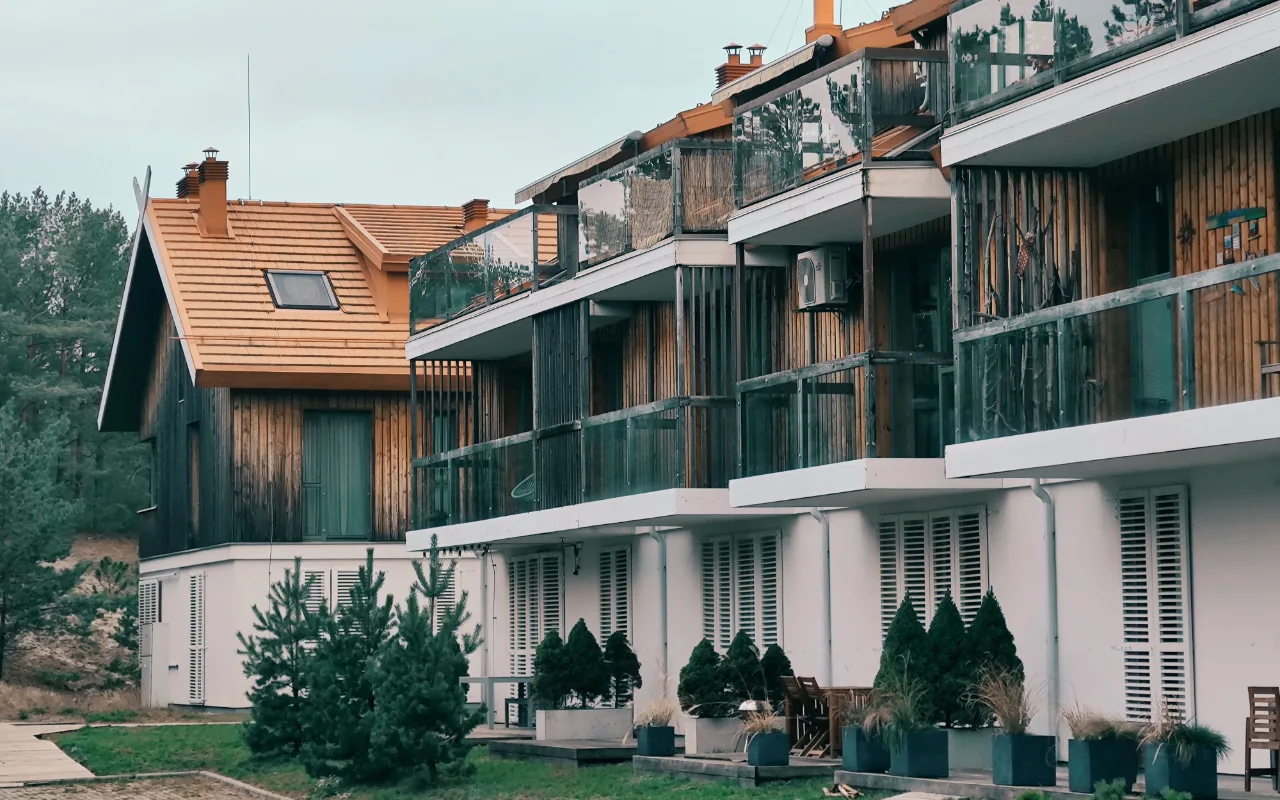
The Condition Clock Is Running on Every Building
Paint doesn't fail uniformly across a site. On a retirement village, strata complex, or school campus, one building might be in near-perfect condition while another is actively delaminating. The one peeling fastest isn't waiting for your schedule — it's getting worse every month the program sits on the planner's desk. Exposed substrate absorbs moisture. Timber rots. Render cracks. By the time your program reaches it, what would have been a Heavy prep job at 115 ft²/hr (10.5 m²/hr) is now an Extensive job at 43 ft²/hr (4 m²/hr). That's more than double the prep hours on the same wall area, and the paint still takes the same number of coats.
This is why painting order on a multi-building site is a financial decision — for your client and for you.
Which Buildings to Paint First: Use Prep Hours, Not Gut Feel
Walking a site and calling one building "worse" than another is too vague to build a schedule on. Gut feel gets overridden by whoever speaks loudest in the client meeting. You need a number.
The number is prep hours per square foot (or per square metre) of paintable surface. Not total prep hours — every big building will have a big prep number. Divide total prep hours by the building's total surface area and you get a condition intensity score that lets you rank any two buildings directly, regardless of their size.
A small building with a high prep intensity score is deteriorating faster per unit of surface than a large building with a low one. It goes to the front of the schedule, even if its absolute prep hours are smaller. This is the ranking method that removes the argument.
In practice: measure every building on the site properly, assign a prep level to each surface based on its actual condition, and let the hours fall out of the arithmetic. Standard prep — wash, sand, fill, spot prime — runs at 270 ft²/hr (25 m²/hr). A building that's averaging out at Heavy (115 ft²/hr / 10.5 m²/hr) or Very Heavy (70 ft²/hr / 6.5 m²/hr) across its surfaces is telling you something urgent. That's the building that goes first.
Surfacely calculates prep hours from your measured surfaces and proposes a worst-first painting order automatically — and if you need to move a building to a different year for any reason, its measured price stays exactly as calculated. The order changes; the numbers don't.
When to Break the Worst-First Rule

Worst-first is the default. It isn't always the final answer. There are legitimate reasons to move a building in the schedule, and knowing them in advance means you're managing the program rather than reacting to it.
- Resident disruption. On a retirement village or residential strata site, scaffolding over an occupied unit is a real issue. If the worst-condition building is also the densest with residents who can't easily relocate, you may push it to a shoulder season or swap it with a building that has shorter occupied periods — but document this decision so the client understands the trade-off.
- Access windows. A school building is simplest to paint during summer break. If a deteriorating building lines up with that window, take it. If it doesn't, a short delay of one cycle is defensible; a multi-year delay is not.
- Other trades on site. If a building is already getting a roof replacement or structural work in year two, coordinate rather than repaint it twice. Timing it to follow the other trades is sensible sequencing, not an excuse to defer the hard work.
- The client wants the street frontage first. This one comes up constantly. It's not automatically wrong — a building with moderate condition that happens to face the street might be close enough in condition intensity to the worst building that the reputational benefit justifies the swap. But if the frontage building is genuinely in good condition and the back building is actively failing, hold the line. Explain it, and let the client make an informed call.
Every exception should be a conscious decision, recorded in the program document, not a casual reorder because someone asked.
How to Explain the Order to a Client in One Sentence
Clients don't want a lecture on prep intensity scores. They want to know their asset is being looked after. One sentence does it:
"We're starting with the buildings that are deteriorating fastest — the ones that will cost significantly more to restore if we leave them another year."
That's it. It frames the order as asset protection, which is exactly what it is. Most clients — body corporates, school business managers, retirement village operators — respond well to that framing because it aligns with how they think about their property portfolio. If a client pushes back and wants the frontage done first, you can have an honest conversation about what that decision costs them in the back of the site. You're not selling a preference; you're presenting a consequence.
Lock the Price, Then Sort the Order
The practical advantage of a measured multi-year program over a string of separate annual quotes is that every building's price is set at measure — before the program starts, before any building has a chance to deteriorate further on your watch. If the order shifts for legitimate reasons, the price for each building stays anchored to its condition at the time of measurement. You're not re-quoting from scratch every time a building moves a year.
This is what separates a properly structured program from a loose promise to come back next year. The client knows what they're spending over the life of the program. You know your margins. And the buildings that need it most get attended to before the condition clock costs everyone more money.
If you're pricing a multi-building site now, try Surfacely free and see the worst-first order come straight out of your measured prep — with the flexibility to move any building without rebuilding your numbers.