
How to Get an Accurate Painting Quote: A Homeowner's Guide
Most homeowners get quotes that vary by 50% or more for the same job. The reason isn't usually that one painter is gouging — it's that different painters quote different scopes, different prep levels, and different products, and the homeowner can't tell which is which from the totals alone. This guide walks through the information painters actually need, what to compare across quotes, and how digital estimate walkthroughs is changing the early stage of the process.
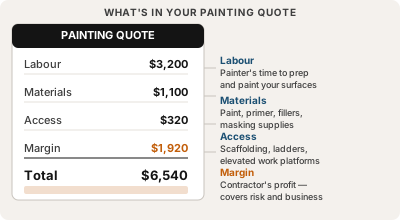
Why painting quotes vary so much
Three factors drive most of the variation in painting quotes for the same house:
- Scope. "Paint the house" means different things. Does it include the soffits? The fascias and gutters? The roof? The garage? Internal trim and skirting? The cheap quote often excludes the time-consuming detail work.
- Prep level. Light sand and dust down (20–30% of paint hours) vs full strip, fill, and prime (80% or more). On a 5-day job, that's several extra days of labour.
- Product. Premium paint like Dulux Wash & Wear, Resene SpaceCote, or Sherwin-Williams Duration costs roughly 30% more per litre than budget tier. It also covers better and lasts longer. The expensive quote is sometimes the better long-term value.
Information your painter needs to quote accurately
Property basics
- Address and access notes (gate, parking, occupancy)
- Year the home was built (matters for lead-paint risk in pre-1970/78/92 buildings)
- Number of storeys
- Whether occupied during works
Scope
- Which rooms are being painted (interior)
- Which elevations are being painted (exterior)
- Whether ceilings are included
- Whether trim, skirting, doors, windows are included
- Whether the roof, fascias, gutters, soffits, downpipes are in scope
Surfaces and condition
- Rough room dimensions (length × width × height)
- Current condition — smooth, peeling, mouldy, water-damaged, cracking
- Photos of any concerning areas
Colours and products
- Whether colours are changing (or going lighter to darker — affects coat count)
- Any colour preferences or brand preferences
- Sheen preference (flat, low-sheen, satin, semi-gloss, gloss)
Timeline
- When you'd like the work done
- Any blackout dates (kids' exams, family events, builder schedule)
How to measure rooms yourself
You don't need a laser measure. A standard tape measure or a phone measure-app is enough for a rough quote.
- Walls: measure the length of each wall and the height (floor to ceiling). Note the rough length of any wall over 4 metres.
- Ceilings: length × width of the room.
- Doors: count them. Note which are internal and which are external.
- Windows: count them. Rough size — small (1 × 1 m / 3 × 3 ft), medium (1.5 × 1.5 m / 5 × 5 ft), or large (over 2 m / 6.5 ft wide).
- Skirting: the perimeter of each room minus door openings. Just walk it off in steps if you don't want to measure.
You don't need to be precise — give the painter ranges and they'll confirm on site or ask follow-up questions.
Surface condition — what to look for and photograph
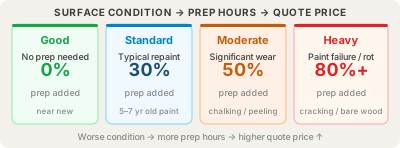
Take a photo of any surface that looks worse than smooth-and-flat. The painter is looking for:
- Peeling. Especially around windows, doors, and external trim.
- Cracks. Hairline (cosmetic) vs structural (often a builder problem, not a paint problem).
- Mould or mildew. Black or green spots, often near showers, corners, or shaded external walls.
- Water staining. Brown rings on ceilings or yellowing on walls.
- Rust. On metal trim, fasteners showing through paint.
- Substrate issues. Crumbling render, rotting timber, soft plasterboard.
Getting multiple quotes — what to compare
Three quotes is the right number. Compare these things, in priority order:
- Scope. Is the same work being quoted? Cross-check rooms, elevations, and trim items line by line. The same total hides different scopes.
- Prep level. Does the proposal say "light sand" or "full prep including filling, sanding, and priming"? Specifics matter.
- Product. Specific paint brand and line — "Dulux Wash & Wear two coats" vs "two-coat acrylic". Vague answers favour the cheap quote.
- Number of coats. Two coats is standard. One coat is rarely enough. Three coats is sometimes necessary for colour changes.
- Warranty terms. What's covered, for how long, and under what conditions. A 7-year warranty against peeling is meaningful; a "satisfaction guarantee" is decoration.
- Insurance and licence. Public liability, workers' compensation, and trade licence (where applicable in the painter's country) — should be in writing on the quote.
- Total — last. Once the above match, the cheapest is the cheapest. If the above don't match, totals are comparing apples and oranges.
The estimate walkthrough process — how digital quote requests work
Many painters now use an estimate walkthrough — a link they send (or a button on their website) where you walk through your home on your phone and submit the information they'd otherwise gather on a site visit. The flow:
- Click the painter's "Get a quote" link.
- Enter your contact details and property address.
- Walk through each room or elevation. Capture photos. Note the rough size and condition.
- Note access details and timeline.
- Submit. The painter receives the full submission — photos, measurements, conditions — as a structured project.
For small to medium jobs, the painter can often quote directly off the estimate walkthrough without an initial site visit. For larger jobs, they'll usually still want to visit, but they arrive already prepared — the quote turnaround is faster either way.
Related guides
- How a painting project runs from start to finish
- Why painting quotes vary so much (margin explained)
FAQ
What information does a painter need to give a quote?
Rooms or surfaces being painted, rough sizes, current condition, colour changes, access notes, timeline. Photos of poor-condition areas help.
How long does a painting quote take?
2–5 business days from first call. Site visit 30–60 minutes. Office time 1–2 hours. The estimate walkthrough can shorten this for smaller jobs.
Why do painting quotes vary so much?
Three factors: scope (what's included), prep level (light sand vs full strip), product (premium vs budget paint). Same total can hide very different jobs.
Should I get multiple painting quotes?
Three quotes. Compare scope, prep, product, coats, warranty, insurance — then compare totals.
What is an estimate walkthrough for painting?
A digital quote request — walk through your home on your phone, capture photos, submit. The painter receives a draft project to quote against, often without an initial visit.