
Painting Production Rates Explained: From Intricate to Production Spray
Painting production rates run from 32 ft²/hr (3 m²/hr) for heritage cutting in to 375 ft²/hr (35 m²/hr) for production spray on new builds. Pick the wrong step and the quote is decorative.
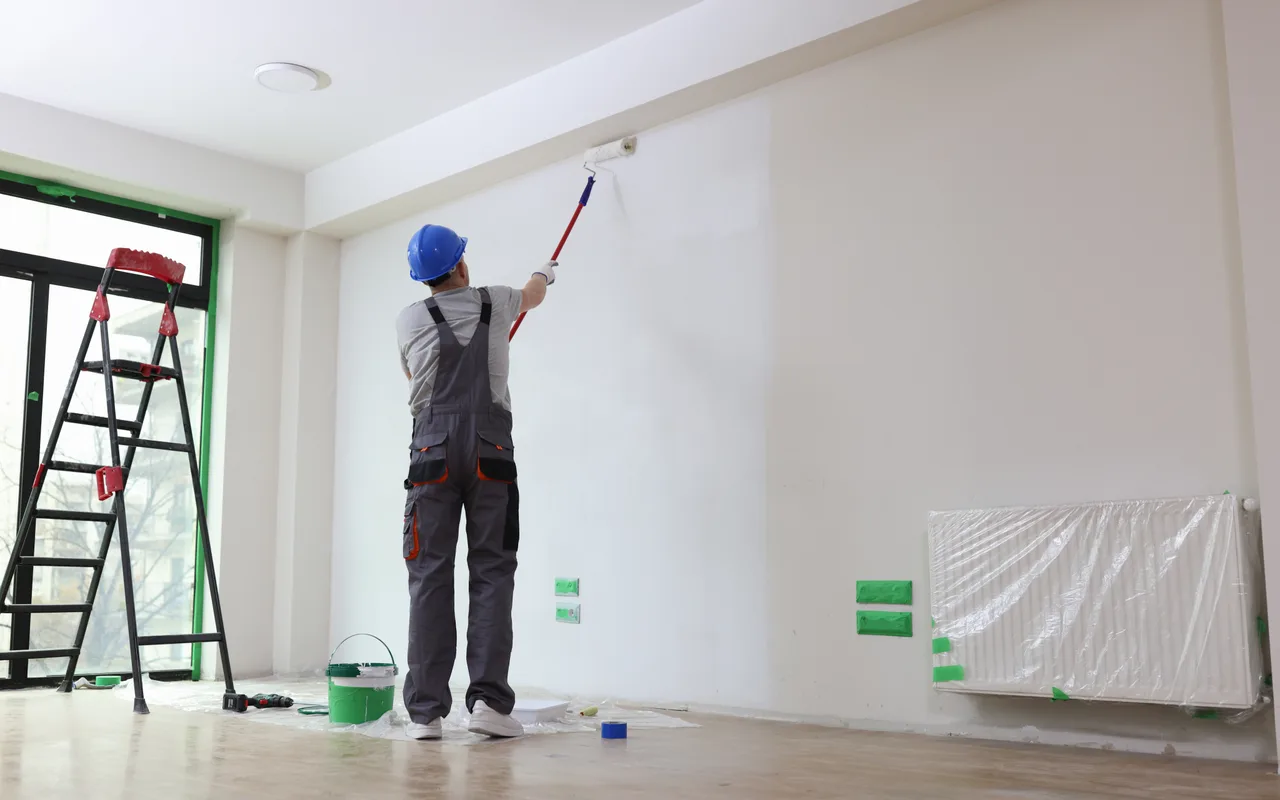
Painting production rates run from 32 ft²/hr (3 m²/hr) for heritage cutting in to 375 ft²/hr (35 m²/hr) for production spray on new builds. Surfacely uses 8 speed steps. The same step number always returns the same rate within an org — what changes per surface is the default step assigned.
The 8 speed steps
| Step | Character | ft²/hr | m²/hr | When to use |
|---|---|---|---|---|
| 1 | Intricate | 32 | 3 | Heritage mouldings, fine cutting in |
| 2 | Detailed | 70 | 6.5 | Panels, multi-sided, lots of cutting in |
| 3 | Careful | 110 | 10 | Some cutting in, average complexity |
| 4 | Steady | 160 | 15 | Standard repaint, good condition (system default) |
| 5 | Efficient | 215 | 20 | Open areas, minimal cutting in |
| 6 | Open | 270 | 25 | Large surfaces, good access |
| 7 | Rapid (spray) | 325 | 30 | Production spray, repetitive surfaces |
| 8 | Production (spray) | 375 | 35 | Full new-build spray, maximum coverage |
How rates drive your quote
The formula is the same on every surface, and unit-neutral — feed it ft² or m² and you'll get the right hours back as long as the area and rate are in the same unit:
paintHours = (area × coats) ÷ productionRate
prepHours  = area ÷ prepRate
totalHours = paintHours + prepHours
A 320 ft² (30 m²) wall with 2 coats at Step 4 (160 ft²/hr · 15 m²/hr) and standard prep (270 ft²/hr · 25 m²/hr): paint hours = 640 ÷ 160 = 4.0 (or 60 ÷ 15 = 4 from the metric defaults). Prep hours = 1.2. Total ≈ 5.2 hours.
Default step per surface
Surfacely's surface library assigns each surface a default speed step. The painter overrides during measurement when the conditions warrant it.
- Walls, floors, gutter, fascia, gable end: Step 4 — Steady (160 ft²/hr · 15 m²/hr).
- Ceilings, stairs, barge board, soffit, slab edge, downpipes: Step 3 — Careful (110 ft²/hr · 10 m²/hr).
- Doors, windows, balustrades, posts, skirting, rafter tails, steel/timber beams: Step 2 — Detailed (70 ft²/hr · 6.5 m²/hr).
- Roofs: Step 5 — Efficient (215 ft²/hr · 20 m²/hr).
The rates are stored in metric and displayed in the painter's unit system — set in business settings, defaulting from the country.
Your Own Rate Is Already There — You Just Have Not Written It Down
The defaults above are a starting point, not the answer. Your crew has its own numbers, and finding them takes one afternoon.
Next week, grab a notepad. Pick a standard internal wall repaint — no complex cutting in, average conditions. Time yourself, or your best painter, from the first stroke to the last. Then measure the area you covered and divide area by hours. That number — say 14 m² per hour, about 150 ft²/hr — is your production rate for that surface.
Do it for every surface type you paint regularly. Walls. Ceilings. Doors. Trims. Fascia. Roof. Each one has a different output and each one moves your labour cost differently.
You already know this intuitively — a panelled door with heavy cutting in takes far longer than an open wall. But without a written number you are estimating from feel every single time, and feel drifts. It drifts most when you are busy, tired, or quoting fast on a Sunday night.
Prep Time Is Separate — Do Not Confuse the Two
When you time your production rate, time only the painting. Prep — sanding, filling, priming, masking — is calculated separately from its own rate, using prep levels rather than your painting production rates. It is charged once, before the first coat, so the coat count never changes it.
- Standard prep 25 m²/hr (270 ft²/hr) — wash, sand, spot fill, dust down
- Moderate prep 15 m²/hr (160 ft²/hr) — older surface, more filler, minor repairs and some scraping
- Heavy prep 9.25 m²/hr (100 ft²/hr) — neglected or peeling: spot strip, extensive filling, primer spots
- Very Heavy prep 6 m²/hr (65 ft²/hr) — weathered exterior, full strip, major substrate repair
The most expensive quoting error in the trade is applying Standard prep (25 m²/hr) to a job that needs Heavy (9.25 m²/hr). On an exterior repaint with weathered timber that gap quietly adds hours the quote never carried. The production rate was right. The job still lost money.
Keep production rates clean. Measure painting time only. Add prep on top.
Turn Your Numbers Into a System
Once your own rates are written down — even just the five surfaces you paint most — your estimates start coming out consistent. Same painter, same conditions, same number. Not a different gut feel every Monday.
Start with walls. Time a standard internal repaint this week and write the number down. Then ceilings, doors and trims. Four surfaces, four numbers. That is the foundation of an estimating system that holds up when someone other than you is doing the quoting.
Accurate quotes do not come from experience alone. They come from experience written down as data.