
Body corporates · strata · HOA boards · facilities managers
Condition reports: the paid job that lands the repaint.
A body corporate, strata committee or HOA board rarely approves a repaint on a quote alone. First it wants to know the condition of what it owns — and it will pay a painter to find out. That report is work in its own right, it needs no crew, no materials and no weather, and the painter who writes it is the one the committee already trusts when the Red areas are approved.
Who orders one, and why they pay
Committees and managers order condition reports because they have obligations a quote does not meet:
- The sinking fund needs a basis. A ten-year plan built on "the buildings look okay" is one nobody will defend at the AGM. A plan built on rated areas and photographed defects is one they can.
- The committee changes; the report stays. This year's chair inherits last year's evidence. Repeating the same photo points year after year shows the property changing, which is the whole argument for maintaining it on schedule.
- It settles arguments. Owners who do not want to spend have a harder time against a photo of their own failing fascia than against a painter's quote.
So they pay a fee, and they pay it to someone who understands painted surfaces. That is you, or it is the building consultant who will then hand the repaint to whoever they like.
What a condition report must contain
- A rating for every area, on one scale. Red (failing, act now), Amber (wear showing, plan work within 1–2 years), Green (sound). An area you could not inspect is marked as exactly that — never as Green by default. A committee reads a page of colours faster than a page of prose.
- Every defect, with a photo, named by its surface. "Peeling, significant, on the fascia: paint lifting in sheets along the north run." The surface matters because the surface is what gets quoted.
- Recommendations by timing. Now · Within 1–2 years · Monitor. Grouped this way they drop straight into a budget.
- Method and limits. A plain statement that this is a visual assessment of painted and coated surfaces made from accessible points, and not a structural, compliance, asbestos or lead report. Say it, every time, in the document.
- A summary the chair can read aloud in a minute. Which block is sound, which is wearing, what needs doing first.
Running the assessment on site
A 72-unit site has to be quick, or you will not do it properly. Work one area at a time and make the default one decision per area: its colour. Go deeper only where there is something to record.
- Rate the area, not every surface. When one surface genuinely differs — a Red fascia on an otherwise Green elevation — rate that surface separately and leave the rest alone.
- Photograph every defect from where it can be found again. Record your position and the direction you faced. Next year's painter, or the committee's own eyes, should be able to stand in the same spot.
- Name your photo points. "North elevation from the car park." "Balcony 3, east corner." The first assessment sets them; every later one repeats them. That repetition is what makes the annual report worth paying for again.
- Keep moving. Nothing should stop you mid-site. Anything unrated or unphotographed is for the review afterwards, where it is listed and stops the send until it is fixed.
Privacy on a lived-in site
A body corporate site is someone's home. A photo of a failing balcony is also a photo of their washing, their car and the inside of their lounge. Before anything reaches the committee:
- Blur faces, people and number plates on every photo you send.
- Blur windows and doorways that show the inside of a home.
- Keep the originals with your own records and never send them.
- Strip embedded location data from the files you send; print the position you want the reader to know as text under the photo instead.
Doing this by hand across two hundred photos is why most painters do not do it. Surfacely runs the check automatically on every photo and only lets a checked copy into a report.
Pricing the fee
Price it as a day rate plus the writing, not as a loss-leader. A report that is free is a report the committee does not value, and a painter who will not charge for a day's work is telling the committee something about the quote to come. State the fee up front, invoice it when the report is sent, and do not tie it to winning the repaint.
The report is low-risk work: no crew, no paint, no scaffold, no weather. It is the easiest job in the business to deliver on time, and that reliability is itself part of the sale.
From report to repaint
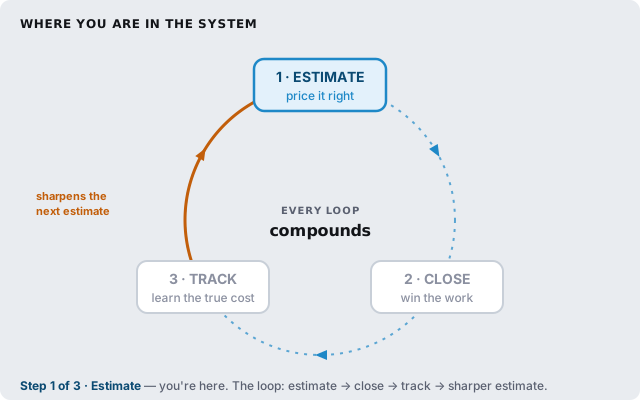
When the committee approves the Red and Amber items, the quote comes from the buildings and areas you already know. If the site is too big or too occupied to paint at once, a multi-year program spreads it over the years the committee can budget for, worst buildings first. Either way, the assessment you were paid to make is the assessment the proposal draws on — do the walk once, get paid for it, and let it carry the job.
From the founder
The committees I quoted best were the ones I had already walked for. By the time the repaint came up I knew every fascia on the site, I had the photos, and the chair knew my name. The other painters were pricing from the car park. That is not luck; it is a condition report, done a year early, and paid for.
So Surfacely has a Condition report job of its own: no quote step, Red-Amber-Green per area, defects with photos, named photo points for next year, every photo checked for faces and homes before a committee sees it, and a branded report the committee reads on a link and downloads as a PDF. The fee is invoiced from the same job, and the proposal reads the assessment when the work is approved.
Your first 5 buildings are free. Assess the next site a committee asks you to look at, and send them a report worth paying for.
Related guides
- What a painting condition report should tell a body corporate
- Painting project management
- How to win more painting jobs
- Painting proposal template
- Grow a painting business: the three systems
FAQ
What is a painting condition report?
A dated, photographed account of how a building's painted and coated surfaces are holding up: every area rated Red, Amber or Green, every defect recorded with a photo and the surface it is on, recommendations grouped by when they should happen, and a plain statement of the method and its limits. It is ordered by body corporates, strata committees, HOA boards and facilities managers before they approve painting, and it carries no price.
Who pays for a condition report?
The client does — the body corporate, owners' corporation, HOA or the facilities manager's budget. It is a fee for a day on site and a written report, invoiced on its own and not tied to winning the repaint.
Should a condition report include a quote?
No. The report's value to a committee is that it is impartial. Keep the price out of it; the quote is a separate document built from the same evidence once the committee decides what to do.
Is a condition report a structural or compliance report?
No, and the report should say so plainly. It is a visual assessment of painted and coated surfaces from accessible points. Where a painter notices something structural, electrical or to do with hazardous materials, it should be recorded so the committee can bring in the right person.
Why repeat the same photos every year?
Because the comparison is the product. A report that shows the same viewpoint in 2026 and 2027 shows the property changing, which is what justifies maintaining it on schedule and what makes the committee order the report again.
What about residents in the photos?
Blur faces, people, number plates and the inside of homes on every photo that reaches the committee, and keep the originals with your own records. Surfacely checks every assessment photo automatically and only lets a checked, blurred copy into the report.