
For painters building a real business
A painting business runs on three systems — and they loop.
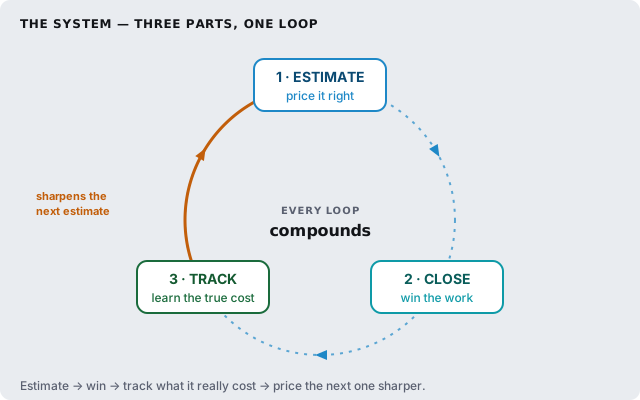
You've mastered the brush. The business is a different craft, and it runs on three systems that feed each other: price the work right, win it, then track what the job actually cost — so your next estimate is sharper. Round and round, each loop compounds. Most painters run one or two by feel and skip the third entirely.
The trap that keeps good painters small
- Wing the price → you win jobs that quietly lose money, and stay busy but never ahead.
- Wing the pitch → you lose jobs you priced perfectly to someone who looked more like a business.
- Never track the job → you repeat the same estimating mistakes for years, because nothing ever tells you where you were wrong. Not because tracking is hard — because no one made it a habit.
System one — Estimate: price it right
Price it right
Every job priced the same way, with nothing left off
Winging the price in your head works on small jobs and quietly bleeds money on big ones. A complete estimating system runs every surface through the same steps — measure, production speed, prep, coats, spread rate, readiness — so the same job always lands on the same, defensible number. That's how you stop underpricing and protect your margin as you scale.
System two — Close: win the work
Win the work
Look like the business you already are
The client can't judge your painting before you start — only how you show up. A branded, itemised proposal, sent the same day, with an easy way to say yes, wins jobs your work deserved. Closing isn't a personality you were born without; it's a process you can run every time.
System three — Track: learn the true cost
Learn the true cost
Not complicated — just disciplined
Tracking a job isn't complex. It's a discipline: log the hours and materials the job actually took, every time, and compare them to what you quoted. Most painters skip it — not because it's hard, but because they never made it a habit. Do it, and every finished job tells you exactly where your estimate was right and where it was off. That's the feedback that makes system one sharper on the very next quote.
The loop is the whole point
Any one system on its own stalls. A perfect price you never win earns nothing. A job you win but underprice loses money. And without tracking, neither one ever gets better — you just keep doing the same job, wrong, forever.
Put the three together and they stop being tasks and start being a flywheel: you price it, you win it, you track it, and what you learn sharpens the next price. Each turn of the loop, your estimates get truer, your margins get safer, and the whole thing compounds. That's the difference between doing 200 jobs and doing the same job 200 times.
From the founder
I'm an estimator and a closer. Profit isn't a talent — it's a system, and mine runs in five stages: measure the job properly, apply your real costs and speed, catch the profit suckers, win it without discounting, then check what it actually cost. Running it has generated millions in sales every year at an average gross profit of over 40%. But it's that last stage that makes the first four compound, and it's the one almost every painter skips. It isn't hard. It's just a discipline most painters never build a habit around.
So I built the whole loop into one tool — price a job the same way every time, turn it into a branded proposal your client accepts online, then capture what it really cost so your next quote is sharper. You run the business like someone who's good at it, and get back to the part you're already great at.
Your first 5 buildings are free. The whole loop, one tool — try it on your next real job.
Related guides
- The complete painting estimating system
- How to win more painting jobs
- Painting job tracking: sharpen every quote
- Painting job costing
- Painting business profit margins
FAQ
What does it take to grow a painting business?
Three systems that feed each other: estimate (price the work right), close (win it), and track (record what the job actually cost). Track feeds back to sharpen the next estimate, so the three form a loop that compounds. Most painters run one or two by feel and skip the third entirely.
Why do painters make the same pricing mistakes for years?
Because they never track what a job actually cost. Without that feedback, nothing tells you where your estimate was wrong, so you repeat the same misses forever. Tracking isn't complex — it's a discipline: log the hours and materials every job takes, and each finished job tells you how to price the next one better.
Is tracking painting jobs complicated?
No. Tracking a job is not complex — it's discipline. It means logging the hours and materials the job actually took, every time, so you can compare it to what you quoted. The hard part isn't the doing, it's the habit; most painters skip it, which is exactly why the ones who don't pull ahead.
What matters most — pricing, winning, or tracking?
They're a loop, so none works alone: a perfect price you never win earns nothing, a job you win but underprice loses money, and without tracking neither ever improves. Tracking is the quiet one that makes the other two get sharper every job.