
System three of three · the one everyone skips
The system that makes every other quote sharper.
Tracking a job isn't complicated — it's a discipline. Log what the job actually took, compare it to what you quoted, and every finished job tells you how to price the next one. It's the third system in the loop, and it's the one that makes the first two get better. Most painters skip it — not because it's hard, but because no one made it a habit.
Have you said this to yourself?
The quiet doubt after a job you thought went well.
“I thought that job made good money — until I actually added up the hours.”
“I've quoted the same way for years. No idea if I'm even close.”
“Every job feels busy. I couldn't tell you which ones actually pay.”
“I finish and move straight to the next one. I never look back.”
“Someone asked my real hourly rate — and I honestly couldn't say.”
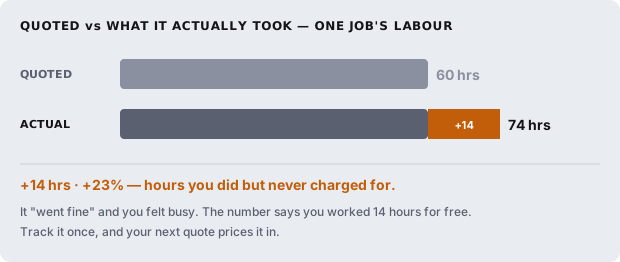
None of that is a painting problem. It's the missing feedback loop — the one habit that turns "it went fine" into a number you can actually learn from.
Tracking is discipline, not difficulty
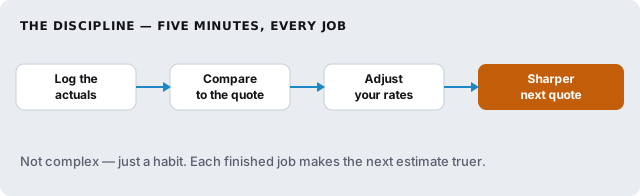
The maths is trivial. The habit is everything. At the end of a job, you write down what it really took and put it next to what you charged. That's the whole system — and here's exactly what to capture:
- The actual hours. Whole crew, every day, prep and set-up included. Not what you hoped — what happened.
- The actual materials. The paint and sundries you really used, including anything you had to go back for.
- Any variations. The surface you didn't quote, the extra coat, the access that turned out harder. The stuff that quietly ate your day.
- Compare it to the quote. Line the actuals up against what you charged. The gap is the lesson — it shows you exactly where the estimate was off.
- Adjust the input that missed. If labour ran 20% over, your production rate or prep level for that kind of work was too optimistic. Nudge it — and the next quote lands right.
How one job sharpens the next
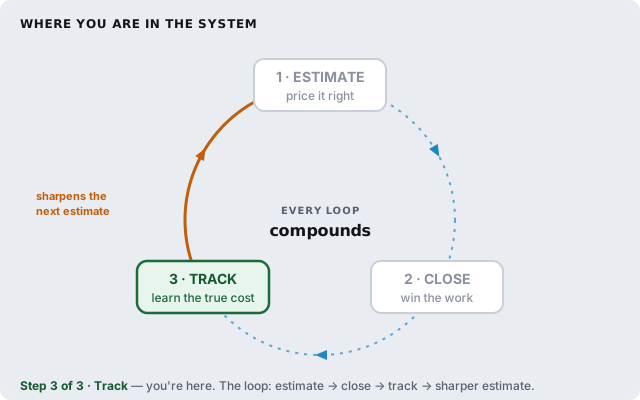
Tracking on its own is just record-keeping. What makes it powerful is the loop it closes: the actuals from this job feed straight back into the rates you quote with on the next one.
Do it for a season and something changes: you stop guessing whether a job made money, because you know. Your quotes tighten, your margins hold, and the whole thing compounds. That's the difference between doing 200 jobs and doing the same job 200 times — this is the third system in the loop that makes the other two pay off.
From the founder
I'm an estimator and a closer. My system runs in five stages and it's generated millions in sales every year at an average gross profit of over 40% — but the stage that made those estimates worth trusting was the last one, not the first. Tracking. Every finished job told me where I was wrong, and I fixed it, quote after quote. That discipline is exactly what most painters never build a habit around — usually because doing it by hand is a chore.
So I made it take seconds. Log what a job took in a couple of taps at completion, and it feeds straight back into your rates — no spreadsheet, no maths. The measure is thorough, the pricing is instant, and now the next quote is smarter than the last.
Your first 5 buildings are free. Track your next real job and watch what it teaches your next quote.
Related guides
- Grow a painting business: the three systems
- The complete painting estimating system
- How to win more painting jobs
- Painting job costing
- Painting business profit margins
FAQ
Is tracking painting jobs complicated?
No. Tracking a job is not complex — it's discipline. It means logging the hours and materials the job actually took, every time, so you can compare them to what you quoted. The maths is trivial; the habit is the hard part, which is exactly why most painters skip it.
What should I track on a painting job?
Three things: the actual labour hours (whole crew, all days, including prep), the actual materials used, and any variations or extras that crept in. Then compare all three to the quote. That comparison is the whole point.
Why track a job that's already finished?
Because the finished job is the only honest teacher you have. It tells you where your estimate was right and where it was off, so your next quote for a similar job is sharper. Without it, you repeat the same pricing mistakes for years.
How is job tracking different from job costing?
Tracking is the discipline of logging what a job actually took. Job costing is what you do with those numbers — comparing actual cost to the quote to see your real profit and margin. Tracking is the habit; costing is the calculation it feeds.
What do I do with the variance between quoted and actual?
Use it to adjust the input that was wrong. If labour ran 20% over, your production rate or prep level for that kind of work was too optimistic — nudge it, and the next quote prices it in. Over a handful of jobs your rates stop being guesses and become your real numbers.